Beds and seed math
Cut Flower Varieties vs Garden Varieties: What to Buy When You Order Seed
Before my research, I didn't know there was a difference. Most of the flower seeds you see at the garden centre or the local store are bred for flower beds, not cut flowers. So most people don't even know you can buy seeds for cut flowers. At least I didn't, and neither did most of the people I've come across here in zone 3. They all thought I was crazy for starting a flower farm in zone 3! My 11 months of research fixed that for me before I ordered my first seed, but it's one of those things nobody tells you.
What's the difference between a cut flower variety and a garden variety?
Height and stems, mostly. The same flower can be bred in very different ways. University of Florida IFAS Extension says bedding zinnias are available that grow only about 6 inches tall, while cut flower zinnias are commonly up to 3 feet tall. Rutgers Cooperative Extension says zinnias can range from 8 inches to 4 feet tall, "depending on the cultivar grown." (A cultivar is just the official word for a variety.)
Kansas State University put it plainly back in 1992, in their guide for cut flower growers: "Many annuals have been developed for use as bedding plants and are not suited for commercial cut flower production." Their ideal cut flower has "long stems (18 inches)" and a vase life of at least 7 days.
A bedding variety isn't a bad flower. It's doing exactly what it was bred to do: stay short, bushy and covered in blooms in a flower bed. It just isn't built for a vase.
Does the variety really make that much difference?
Yes, even among varieties that look the same on the packet. Dr. John Dole and the NC State cut flower team ran a dahlia trial in 2018 with growers from zones 4 to 8. Before it started, they noted that most dahlias sold are "destined for home gardens, and don't have the productivity, stem length or vase life needed by commercial cut flower growers."
Even within the eight dahlias they chose to test, results were all over the place. Their best performer averaged stems "a little over 20 inches," with one grower cutting 30-inch stems. Comments on others included "The stems weren't very long or strong." Same flower, same trial, very different results, all because of the variety.
Rutgers saw the same thing with zinnias. In their 2006 trial of five varieties, two tall cut flower types, Benary's Giant and Oklahoma, had the highest average cut flower quality ratings.
Are all zinnias created equal?
Not even close. Most zinnias you'll grow for bouquets are Zinnia elegans, the common zinnia. But that one species has been bred in two very different directions. NC State Extension lists tall cut types like 'Benary's Giant' and 'State Fair' reaching up to 4 feet, right alongside dwarf types like 'Thumbelina' at just 4 to 6 inches. Same species, a whole bouquet's difference in stem length.
Then there are the zinnias that aren't Zinnia elegans at all. Narrow-leaf zinnia (Zinnia angustifolia) typically grows 8 to 16 inches tall, according to NC State Extension. The Profusion and Zahara types are compact and bushy, about 1 to 2 feet tall, and NC State notes they resist powdery mildew, the white, dusty coating that often shows up on zinnia leaves by late summer. Common zinnias, on the other hand, are "susceptible to powdery mildew, leaf spots, root rots, and blights."
So which should you grow? NC State tags these compact zinnias as good for cutting, and they'll give you sweet little stems for a jar on the table. But if you want long stems for a full bouquet, look for a tall Zinnia elegans variety bred for cutting.
Are all snapdragons bred for cutting?
No. Snapdragons (Antirrhinum majus) come in every height. NC State Extension lists them from about 6 inches to 3 feet tall, with dwarf, mounded types like 'Montego' at 6 to 8 inches for edging and tall upright types for cutting. Those short, bushy snapdragons in garden centre six-packs are lovely along a path, but they won't give you a bouquet.
Cut snapdragons have one more layer most people never hear about: season groups. Cornell University explains that cut snapdragon varieties "are classified into 4 groups" by the light and day length of the season they're bred for. Group 1 is for winter in a greenhouse, Groups 2 and 3 for early spring and late fall, and Group 4 for summer's high light and heat. Grow a group in the wrong season and the stems suffer. Cornell found Group 1 varieties flower early but "develop short stems" in their spring tunnels, while Groups 2 and 3 were the most productive.
Utah State University Extension found you can stretch your snapdragon season to as long as 21 weeks of good stems by growing more than one group and staggering your planting dates. So when you order snapdragon seed, look for the group number on the packet and match it to the season you'll be cutting in.
How do I tell if seed is for cut flowers?
Read the description before you buy. NC State Extension's Chatham County gardeners say they "check the plant information carefully for suitability for cutting," and that seed catalogues often mark good cutting flowers with a special icon. Here's what to look for:
- Height. Look for the plant height or stem length. Kansas State's 18-inch stem is a good goal, and many cut flower varieties grow well past that.
- The words. "Cut flower," "for cutting" or "long stems" are good signs. "Dwarf" or "bedding" usually means a short plant bred for flower beds.
- Snapdragon groups. Look for the group number (1 to 4) and match it to the season you'll be cutting in.
- Pollenless sunflowers. Choose pollenless sunflowers for bouquets. NC State Extension says pollenless varieties keep pollen from staining your tablecloth, and Kansas State found pollen was "objectionable to the consumer" in their trials.
- Where you buy. Garden centre racks are mostly bedding varieties. Seed catalogues for cut flower growers make it easier, since many mark their best cutting flowers.
Does it change by zone?
The rule is the same everywhere: buy for the vase, not the bed. What changes is which cut flower variety fits your season.
In cold zones like mine, our season is short, so check how long a variety takes to bloom. A tall, late variety is no good if frost arrives before it flowers. You can see the real dates I plan around in Charlie Lake on The Farm Journal: When to Start Cut Flower Seeds in Zone 3.
In every zone, match snapdragon groups to your season. In a short season, that might mean one early planting of a spring group. In a long one, you can follow it with a summer group. (More on why cool flowers go first in Cool Flowers and Hot Flowers: What to Sow First in Any Zone.)
In warm zones with a long season, you have room to choose for yield. University of Florida IFAS found that smaller-flowered zinnias like the Oklahoma series gave more stems each week than the big-flowered types.
Here's the but. A cut flower variety still needs good care to give you those long stems. Florida IFAS notes that zinnia stems get shorter with each harvest, and Rutgers found zinnias lasted much longer in water with floral preservative than in plain water. Good seed is the start, not the whole story.
Cory's take
The research I've done says the seed packet you choose matters as much as anything you do in the flower field. You can get every date right and still end up with short stems if the seed was bred for a flower bed.
My strong opinion? Before you order a single packet, check the height and look for the words "for cutting." It takes two minutes and saves you a whole season. I didn't know to do that until I'd spent months researching, and that's one of the reasons I created Stemwise.
Join the waitlist
Stemwise is a cut flower planning app made for where YOU grow. Join the Stemwise waitlist and you'll be the first to know when it opens.
Sources and further reading
- John M. Dole, Nathan Jahnke, Ingram F. McCall, Ben Bergmann and Judy M. Laushman, NC State University, "2018 ASCFG Dahlia Cut Flower Trial Report," Cut Flowers Quarterly, 2019. https://cutflowers.ces.ncsu.edu/news/2018-ascfg-dahlia-cut-flower-trial-report/
- Rick Schoellhorn, Everett Emino and Erin Alvarez, University of Florida IFAS Extension, "Specialty Cut Flower Production Guidelines for Florida: Zinnia," ENH 953, 2004. https://journals.flvc.org/edis/article/download/109358/104545/152684
- Alan B. Stevens and Karen L. B. Gast, Kansas State University, "Specialty Cut Flowers: A Commercial Growers Guide," MF-1034, 1992. https://bookstore.ksre.ksu.edu/pubs/MF1034.PDF
- NC State Extension Gardener Plant Toolbox, "Zinnia elegans." https://plants.ces.ncsu.edu/plants/zinnia-elegans/
- NC State Extension Gardener Plant Toolbox, "Zinnia angustifolia." https://plants.ces.ncsu.edu/plants/zinnia-angustifolia/
- NC State Extension Gardener Plant Toolbox, "Zinnia marylandica." https://plants.ces.ncsu.edu/plants/zinnia-marylandica/
- NC State Extension Gardener Plant Toolbox, "Antirrhinum majus." https://plants.ces.ncsu.edu/plants/antirrhinum-majus/
- Cornell University, Cornell High Tunnels, "Snapdragon." https://blogs.cornell.edu/hightunnels/flowers/cut-flowers/cut-flower-crops/snapdragon
- Maegen Lewis, Melanie Stock, Tiffany Maughan, Brent Black and Dan Drost, Utah State University Extension, "Snapdragon Cut Flower Production in Utah," 2021. https://digitalcommons.usu.edu/extension_curall/2187
- Kim Outing and Laurie Cousart, NC State Extension, Chatham County Center, "Creating a New Cut Flower Garden? Here Are Some Tips," 2021. https://chatham.ces.ncsu.edu/creating-a-new-cut-flower-garden-here-are-some-tips
- Jenny Carleo, Nicholas Polanin and Meredith Melendez, Rutgers Cooperative Extension, "Cut Flowers for the Market and Home Garden: Zinnia," FS1161, 2011. https://ocean.njaes.rutgers.edu/wp-content/uploads/2024/09/fs1161.pdf
Questions growers ask
Can I use regular garden seeds for cut flowers?
You can, but many garden varieties are bred to stay short. Kansas State University found many annuals bred as bedding plants aren't suited to cut flower production. Look for varieties bred for cutting.
How long should cut flower stems be?
Kansas State University's guide for cut flower growers suggests about 18 inches as an ideal. Many cut flower varieties grow longer.
Why are my zinnias so short?
It may be the variety. University of Florida IFAS Extension says bedding zinnias can stay about 6 inches tall, while cut flower zinnias commonly reach 3 feet.
What's the difference between Zinnia elegans and Profusion or Zahara zinnias?
Zinnia elegans is the common zinnia, and its tall varieties are the classic long-stemmed cut flower. Profusion and Zahara types are compact, about 1 to 2 feet tall, and resist powdery mildew, according to NC State Extension. They cut for small posies but won't give you long stems.
Are all snapdragons good for cut flowers?
No. NC State Extension lists dwarf snapdragons as short as 6 to 8 inches for edging. For cutting, choose tall varieties, and match the season group (1 to 4) on the packet to when you'll be cutting.
What does pollenless mean on sunflower seed?
The flowers don't shed pollen. NC State Extension recommends pollenless sunflowers for cutting so the pollen doesn't stain your tablecloth.
Where do I buy cut flower seeds?
Most garden centre racks carry bedding varieties. Look for seed catalogues for cut flower growers, and check every description for the plant height and "for cutting."
About the author
Cory Franklin
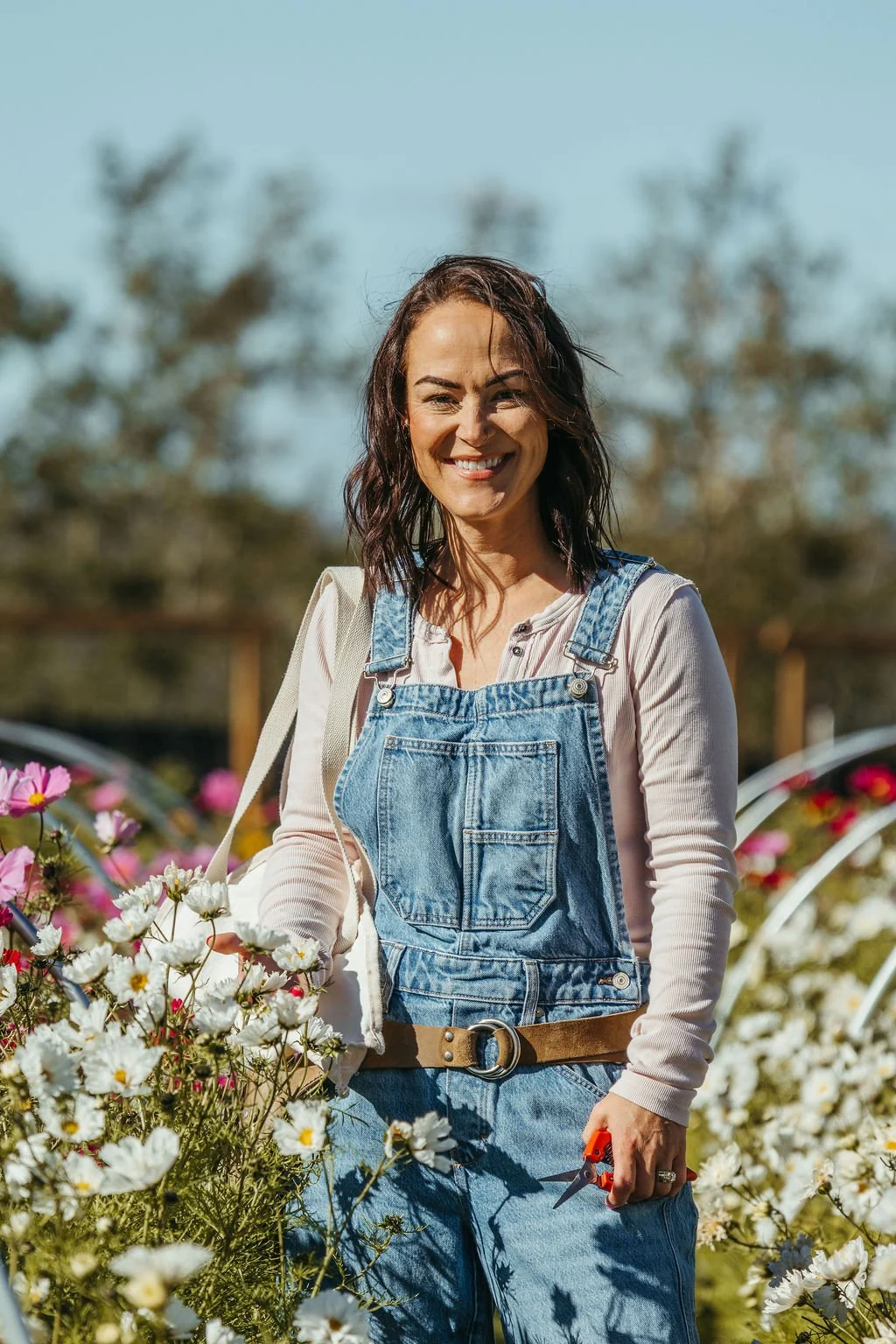
Cory Franklin grows cut flowers in zone 3 in northern BC.