Plan your season
How to Plan a Cut Flower Garden Around Your Frost Dates
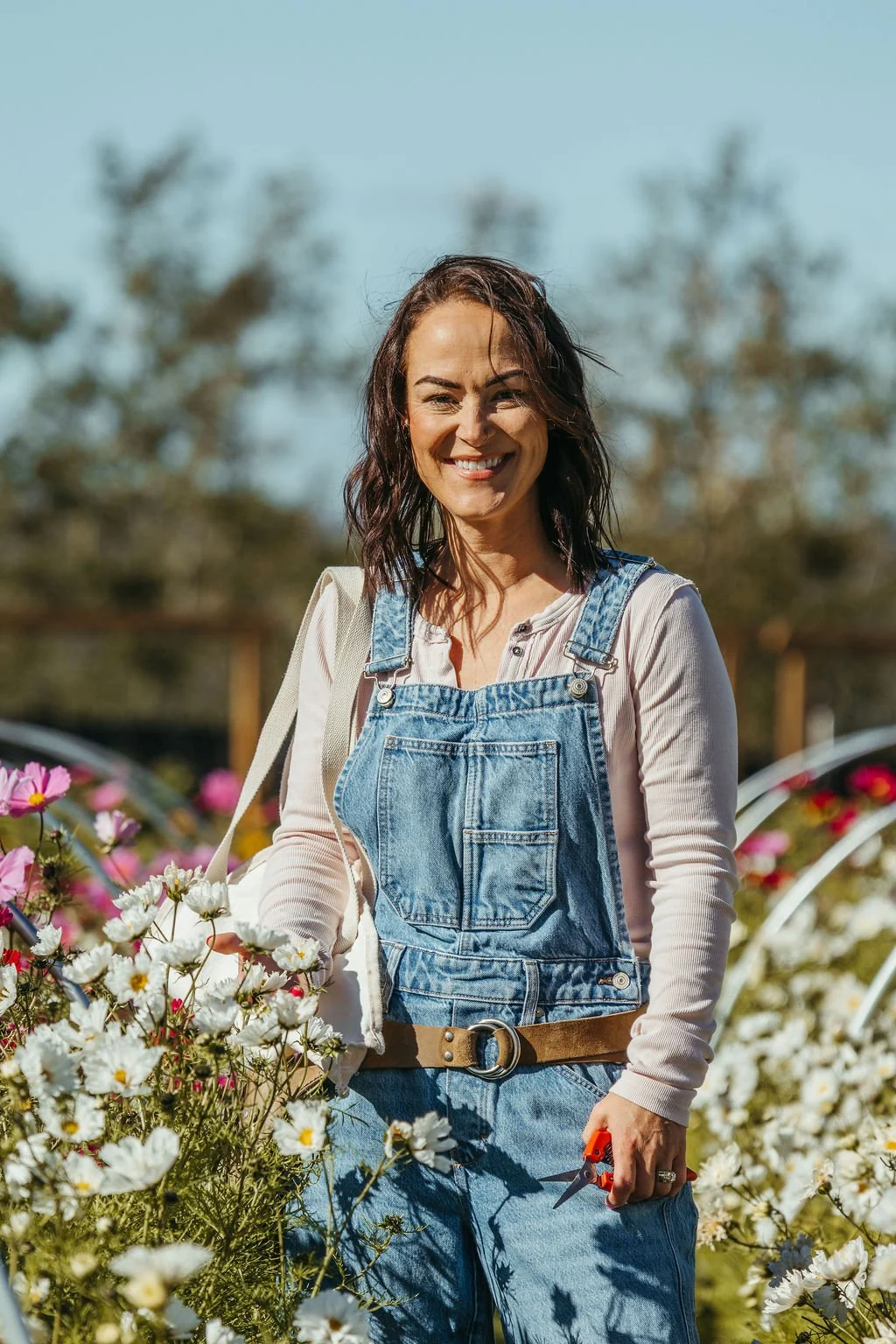
When I started planning my first cut flower garden, I was so overwhelmed. I spent 11 months digging through websites, growing books and research articles trying to find an answer that was right for my zone. The research kept coming back to two dates: my last spring frost and my first fall frost. What took me longer to learn is that those dates are a guess, and Old Man Frost doesn't read the calendar. That's where every good cut flower plan starts.
What is a frost date?
A frost date is the day frost usually stops in spring, or usually starts in fall, where you live. It's worked out from years and years of local weather records. The catch is the word "usually." An average frost date means there's still about a 50% chance of frost after it in spring, and about a 50% chance it comes before it in fall.
Climatologist Pat Guinan at the University of Missouri Extension describes the average (median) frost date as the date with a 50 percent chance of a frost before or after it. Peter Dzikowski at Alberta Agriculture put it even more plainly back in 1998, in a guide built from 114 Alberta weather stations: averages "have limited value because they denote the 50 per cent risk level."
So your last frost date is basically a coin toss with a calendar attached. Heads, your seedlings are fine. Tails, you're out in your pyjamas at 11 p.m. throwing bedsheets over the bed.
Here in Charlie Lake, our average first fall frost is September 15. This fall Old Man Frost didn't show up until October 10, almost four weeks late. Lovely for the dahlias, and a good reminder that the average is a guess. The 50% cuts both ways, so some years he comes early instead.
How do I find my frost dates?
Start with weather records from where you live. Here's where the research I've done points:
- In Canada, Environment and Climate Change Canada publishes the Canadian Climate Normals. The current set covers 1991 to 2020, and you can search by the station or town closest to you.
- On the Prairies, Alberta and Manitoba both publish frost risk tables that go beyond the average.
- In the United States, your state's extension service is the place to look. The University of Missouri Extension, for example, built its frost and freeze guide from 103 weather stations.
When you find your dates, write down two numbers for spring. Alberta Agriculture suggests planning around a 25% risk instead of the 50% average. In Manitoba's records, that safer 25% date lands about eight days after the average last spring frost. Your area will be a little different, but now you know what to look for.
Why does my garden get frost when the forecast says it won't?
Your frost date comes from a weather station, and your garden isn't standing next to it. Low spots, hills, wind, water and even the soil itself can make your beds colder or warmer than the official number. Purdue Extension says it plainly: airport weather readings "most often do not reflect the temperature in a grower's fields," especially in frost pockets.
Low spots are frost pockets. Cold air is heavier than warm air, so on a still night it slides downhill and pools in the lowest part of your yard, like water filling a bowl. Purdue Extension found the air in a frost pocket can be up to 15°F colder than the higher ground around it. Alberta Agriculture found one frost hollow with a frost-free season 20 to 30 days shorter than a spot just a mile away. That's a whole lot of flowers.
Hills and slopes help. Sloping land lets the cold air drain away, and Alberta Agriculture notes that south-facing slopes usually have warmer soil too. If you have a gentle slope that faces south, that's prime real estate for your hot flowers.
Clear, calm nights are the sneaky ones. The coldest nights are clear and still. Clouds act like a blanket, and wind stirs warmer air down to the ground, so a cloudy or breezy night is less likely to frost.
Water, towns and trees change things. Big lakes soften the cold on nearby land, and Purdue Extension says that near Lake Michigan the first fall freeze comes about two or three weeks later than average. Towns hold heat, so the city can stay frost-free while the country down the road gets hit. Even a tree or a roof overhead keeps heat from escaping into the night sky, according to University of Georgia Extension.
The ground counts too. Alberta Agriculture found the temperature right at ground level on a calm night can be 1 to 6°C colder than the official weather reading. Bare, moist, firmly packed soil holds onto daytime heat better than dry, fluffy soil or a thick layer of mulch.
To put all this to work, walk your yard early on the first cold, clear mornings of fall, or the last ones in spring. Notice where a light frost shows up first and stays longest. Those are your frost pockets. Save your warmest, highest spot for your hot flowers. Before a cold night, water your beds, because Purdue Extension says well-watered plants are a wiser bet for home gardeners. And keep row cover handy, with the edges anchored with soil. Purdue notes a light floating row cover only buys you a few degrees, so on a very cold night you'll want something heavier.
Which flowers can go out before my last frost?
This is where it gets fun, because not every flower is scared of the cold. Extension services sort annual flowers into three groups by how much cold they can take, and the group tells you when each one goes outside in spring. In Stemwise, we call them cool flowers, in-between flowers and hot flowers.
| Group | What it means | When it goes out in spring |
|---|---|---|
| Cool flowers (hardy annuals) | Handle cold soil, cool air and light frost | A few weeks before your last frost date. The University of Illinois Extension says about 4 weeks. |
| In-between flowers (half-hardy annuals) | Handle cool soil and air, but frost damages them | Close to your last frost date |
| Hot flowers (tender annuals) | Need warm soil and warm air, no frost at all | On your last frost date or a few weeks after |
Snapdragons, sweet peas and larkspur are classic cool flowers. Strawflower and statice are in-between flowers. Zinnias and cosmos are hot flowers, so they wait for warm soil.
If your head is spinning a little, you're in good company. Hardy, half-hardy, tender, frost-free date, last frost date... the labels alone are confusing, and every source uses its own words for the same thing (even the ones in this post!). When I started, I had to look up every single flower to find out which group it was in. That's one of the reasons I created Stemwise. You pick your flowers, and Stemwise already knows which group each one belongs to and when it goes out where you grow.
And if your winters are mild enough, many of those cool flowers don't have to wait for spring at all.
How do I count backward to start seeds?
Once you know your last frost date, you can count backward on the calendar. The University of Georgia Extension says most annuals can be started indoors six to eight weeks before the last frost.
So if your last frost is May 15, six to eight weeks back lands between March 20 and April 3. That's the general window. Every flower runs on its own clock, though. Some need a long head start, some hate being moved and do better sown right in the bed, and a ranunculus corm doesn't start anything like a zinnia seed. That's a whole post of its own, coming next in the Stemwise Journal. If you'd like to see what this looks like with real dates in a cold zone, I wrote down exactly when I start my seeds in Charlie Lake over on The Farm Journal: When to Start Cut Flower Seeds in Zone 3.
Can I plant cool flowers in the fall?
It depends on your winter, and this is where your zone changes the plan the most. In milder zones, fall planting is often the better way to grow cool flowers, because the plants use the cool fall weather to set roots and get a head start on spring.
In mild and warm zones, fall is prime time. In Georgia, the University of Georgia Extension lists snapdragons, sweet peas, larkspur and Iceland poppies among the annuals to sow in fall. In Louisiana, LSU AgCenter says fall sowings are best for these flowers, because they need a stretch of cool temperatures to start making flowers at all. Their bachelor's buttons grow a big leafy rosette through the winter and bloom in February and March.
In the middle zones, fall planting works too, with a little timing. Penn State Extension says hardy annual seeds "are best planted outdoors in fall, about six weeks before the first frost." So if your first fall frost lands around October 15, you'd be sowing around the start of September. In North Carolina, Kinsey Watkins at N.C. Cooperative Extension notes that bachelor's buttons and bupleurum are so winter hardy they need no winter protection at all.
In cold zones like mine, here's the but. I would love to fall plant some of my cool flowers, but in zone 3 it just isn't possible. Instead, our cool flowers go out in early spring, a few weeks before the last frost. Same flowers, completely different calendar, all because of where you grow. Winter in zone 3 is no joke, either. I learned that the hard way when 8,000 tulips rotted in my raised beds after one too many freeze and thaw cycles. The whole story is on The Farm Journal: Can You Grow Tulips in Raised Beds in Zone 3?
Even in a mild zone, winter can surprise you. LSU AgCenter warns that in a year with a lot of hard freezes, fall-planted stock can be lost completely. So the tougher cool flowers are the safest bet for fall, and the tender ones wait for spring like everyone else.
What about the end of the season?
Your first fall frost is the other bookend. Tender flowers stop when it arrives, so your plan has to fit their blooms in before it. In milder zones it's also your countdown for fall sowing, since you count back from it to know when your cool flowers go in. The days between your last spring frost and first fall frost are your frost-free season.
On average, ours in Charlie Lake runs from May 15 to September 15, about 123 days. Manitoba's records show frost-free seasons from about 117 days in its shortest region to about 141 days in its longest. If your season is short, a flower that takes a long time to bloom needs an early start, or it may not make it before frost. If your season is long, you have room for more than one round of the same flower.
Cory's take
The research I've done says your frost dates are the two most important numbers in your whole plan, and also the two you should trust the least. That sounds backward, but it's what makes a plan work. Use them to build your calendar, then give yourself a cushion on both ends.
My strong opinion? Plant your hot flowers a little late. A week of waiting costs you almost nothing. One frosty night on a bed of tender seedlings costs you weeks, plus whatever you spent on seed. Keep frost cloth handy for your cool flowers, and let the hot ones wait for warm soil.
Join the waitlist
Stemwise is a cut flower planning app made for where YOU grow. Join the Stemwise waitlist and you'll be the first to know when it opens.
Sources and further reading
- Peter Dzikowski, Alberta Agriculture and Food, "Freezing Date Probabilities," Agdex 075-2, revised 1998. https://www1.agriculture.alberta.ca/$department/deptdocs.nsf/all/agdex10/$file/075-2.pdf
- Province of Manitoba, Manitoba Agriculture, "Agricultural Climate of Manitoba." https://gov.mb.ca/agriculture/weather/print,agricultural-climate-of-mb.html
- University of Missouri Extension, "MU Extension offers free frost/freeze guide," Linda Geist, with climatologist Pat Guinan, 2018. https://extension.missouri.edu/news/mu-extension-offers-free-frost-freeze-guide
- University of Illinois Extension, "Annuals." https://extension.illinois.edu/flowers/annuals
- Paul A. Thomas, reviewed by Bodie Pennisi, University of Georgia Cooperative Extension, "Flowering Annuals for Georgia Gardens," Bulletin 954, revised 2026. https://fieldreport.caes.uga.edu/wp-content/uploads/2022/10/B954-Flowering-Annuals-for-Georgia-Gardens.pdf
- Hans Schmitz and B. Rosie Lerner (original author Larry A. Caplan), Purdue Extension, "Effects of Cold Weather on Horticultural Plants in Indiana," HO-203-W, revised 2023. https://www.extension.purdue.edu/extmedia/HO/HO-203-W.pdf
- Government of Alberta, Agriculture and Forestry, "Protection Against Frost Damage" (Agdex 075-1), last reviewed 2018. https://www1.agriculture.alberta.ca/$department/deptdocs.nsf/ba3468a2a8681f69872569d60073fde1/b51a3ed669efe63987256a340055f849!OpenDocument
- University of Georgia Cooperative Extension, "Microclimates of frost," Climate and Agriculture in the Southeast blog, 2016. https://site.extension.uga.edu/climate/archive/post/microclimates-of-frost/
- Lois Miklas, Penn State Extension, "How Hardy Are Your Annuals?", updated 2024. https://extension.psu.edu/how-hardy-are-your-annuals
- Kinsey Watkins, N.C. Cooperative Extension, Richmond County Center, "Hardy Annuals Aren't Hard," 2025. https://richmond.ces.ncsu.edu/news/hardy-annuals-arent-hard/
- LSU AgCenter, "Field-grown cut flowers for Louisiana: Annuals." https://www.lsuagcenter.com/topics/lawn_garden/ornamentals/floriculture/cut_flowers/field-grown-cut-flowers-for-louisiana/annuals
- Environment and Climate Change Canada, "Canadian Climate Normals." https://climate.weather.gc.ca/climate_normals/index_e.html
Questions growers ask
Is the last frost date the same as the frost-free date?
Mostly, yes. Extension services use both phrases for the average date of the last spring frost. Just remember it's an average, so there's still about a 50% chance of frost after it.
What temperature counts as frost?
Manitoba's agricultural climate guide counts frost as 0°C or colder. In the United States you'll usually see 32°F, which is the same thing.
Can I plant cool flowers before my last frost in a cold zone?
Yes. Cool flowers (hardy annuals) handle light frost, and the University of Illinois Extension puts them out about four weeks before the last frost date. Keep frost cloth nearby for a very cold night.
Can I sow cool flowers in the fall where I live?
If your winters are mild enough, yes. Penn State Extension times fall sowing of hardy annuals about six weeks before your first frost. In very cold zones like zone 3, cool flowers wait for early spring instead.
Do frost dates ever change?
They do. Canada's Climate Normals are recalculated over time. The current set covers 1991 to 2020, and older sets go back to 1931. Check the newest numbers for your area.
Should I use the average date or a safer date?
For tender hot flowers, the safer date. Alberta Agriculture suggests planning around a 25% risk instead of the 50% average, which pushes your spring date a little later.
About the author
Cory Franklin
Cory Franklin grows cut flowers in zone 3 in northern BC.